Training Laparoscopy Outside the Theatre What Actually Works

Laparoscopic surgery demands precision, skill, and confidence. Yet, gaining these qualities solely through operating room experience can be challenging. Training laparoscopy outside the theatre has become essential for surgeons to develop and refine their skills safely. But what methods truly work? In this post, I explore effective approaches to laparoscopic training beyond the operating room, drawing on practical examples and tools that enhance learning.
The Need for Training Laparoscopy Outside the Theatre
Laparoscopy involves operating through small incisions using a camera and specialized instruments. The technique offers many benefits for patients, including less pain and quicker recovery. However, it requires a steep learning curve for surgeons.
Operating rooms are high-pressure environments where patient safety is paramount. This limits opportunities for trainees to practice freely or make mistakes. Additionally, theatre time is costly and limited. These factors make it clear that supplementary training outside the theatre is necessary.
Outside-theatre training allows surgeons to build hand-eye coordination, instrument handling, and procedural knowledge in a controlled setting. It also enables repeated practice, which is crucial for skill acquisition.
Effective Methods for Laparoscopic Training Outside the Theatre
Several training methods have proven effective in developing laparoscopic skills. These include simulation models, virtual reality trainers, and structured courses. Each has unique advantages and can complement one another.
Simulation Models and Box Trainers
Physical simulation models, often called box trainers, provide a hands-on experience with real laparoscopic instruments. Trainees perform tasks such as peg transfers, suturing, and knot tying inside a box that mimics the abdominal cavity.
Box trainers are affordable and portable. They allow repeated practice of basic skills and improve dexterity. For example, the LaparoSim Basic Trainer offers a compact design with interchangeable task modules. It helps surgeons master essential movements before advancing to complex procedures.
Virtual Reality (VR) Simulators
VR simulators create immersive environments where trainees can perform entire laparoscopic procedures virtually. These systems provide real-time feedback on performance metrics like precision, speed, and errors.
One notable product is the SurgiVision VR Trainer, which offers realistic anatomy and instrument interaction. It allows users to practice a variety of surgeries, including gynecologic oncology cases. VR simulators help bridge the gap between basic skills and live surgery by simulating operative scenarios.
Structured Training Courses
Courses that combine didactic teaching, hands-on practice, and assessment are highly effective. They often use a blend of box trainers, VR simulators, and expert supervision.
For instance, the Advanced Laparoscopy Skills Course integrates theory with practical sessions. Participants receive personalized feedback and complete competency evaluations. Such courses accelerate learning and ensure surgeons meet proficiency standards before operating independently.
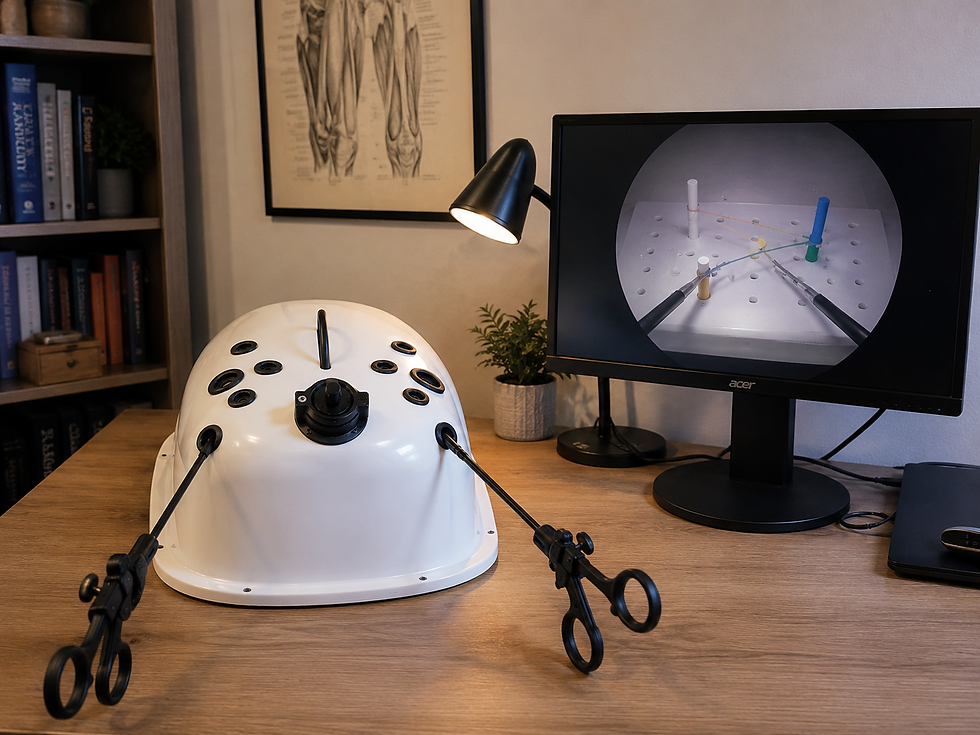
Laparoscopic box trainers provide a realistic environment for practicing essential skills outside the theatre.
Comparing Training Tools: Box Trainers vs. VR Simulators
Choosing the right training tool depends on goals, resources, and experience level. Both box trainers and VR simulators have strengths and limitations.
| Feature | Box Trainers | VR Simulators |
|-----------------------|------------------------------------|----------------------------------|
| Cost | Generally lower | Higher initial investment |
| Portability | Highly portable | Less portable, requires setup |
| Realism | Physical instruments, tactile feel | Visual and haptic feedback |
| Feedback | Limited to self-assessment | Detailed performance metrics |
| Variety of procedures | Limited to basic tasks | Wide range of simulated surgeries|
| Maintenance | Minimal | Requires software updates |
Box trainers excel at building foundational skills with real instruments. VR simulators offer comprehensive procedural practice and objective feedback. Ideally, a training program combines both to maximize benefits.
Integrating Training into Surgical Practice
Training outside the theatre should not be a one-time event. Regular practice and assessment are key to maintaining and improving laparoscopic skills.
I recommend surgeons set aside dedicated time weekly for simulation practice. Using tools like the LaparoSim Basic Trainer or SurgiVision VR Trainer can keep skills sharp between cases.
Mentorship and peer review also enhance learning. Discussing cases, reviewing videos, and receiving feedback help translate simulation skills into clinical success.
The Role of Technology in Advancing Training
Technology continues to improve laparoscopic training. Newer simulators incorporate artificial intelligence to tailor feedback and adapt difficulty. Augmented reality overlays can guide trainees during practice.
For example, the SurgiVision VR Trainer uses AI algorithms to analyze instrument movements and suggest improvements. This personalized coaching accelerates skill development.
Such innovations promise to make training more efficient and accessible, especially in regions with limited theatre exposure.

Virtual reality simulators provide immersive environments for practicing complex laparoscopic procedures.
Challenges and Considerations
Despite advances, training outside the theatre faces challenges. Access to high-quality simulators can be limited by cost and availability. Some surgeons may lack time or motivation for regular practice.
Ensuring training translates into improved patient outcomes requires structured curricula and assessment. Institutions should support ongoing education and provide resources.
Additionally, simulation cannot fully replicate the unpredictability of live surgery. Trainees must eventually gain supervised theatre experience to consolidate skills.
Final Thoughts on What Actually Works
Training laparoscopy outside the theatre works best when it combines multiple approaches. Physical box trainers build essential manual skills. VR simulators offer realistic procedural practice and feedback. Structured courses provide guidance and assessment.
Ongoing practice, mentorship, and embracing new technologies will continue to improve laparoscopic training. This ultimately benefits patient care by reducing complications and improving surgical outcomes.
Training outside the theatre is not a substitute for real surgery but a vital complement. It builds the foundation for surgical excellence and innovation in women’s health and gynecologic oncology.


Comments